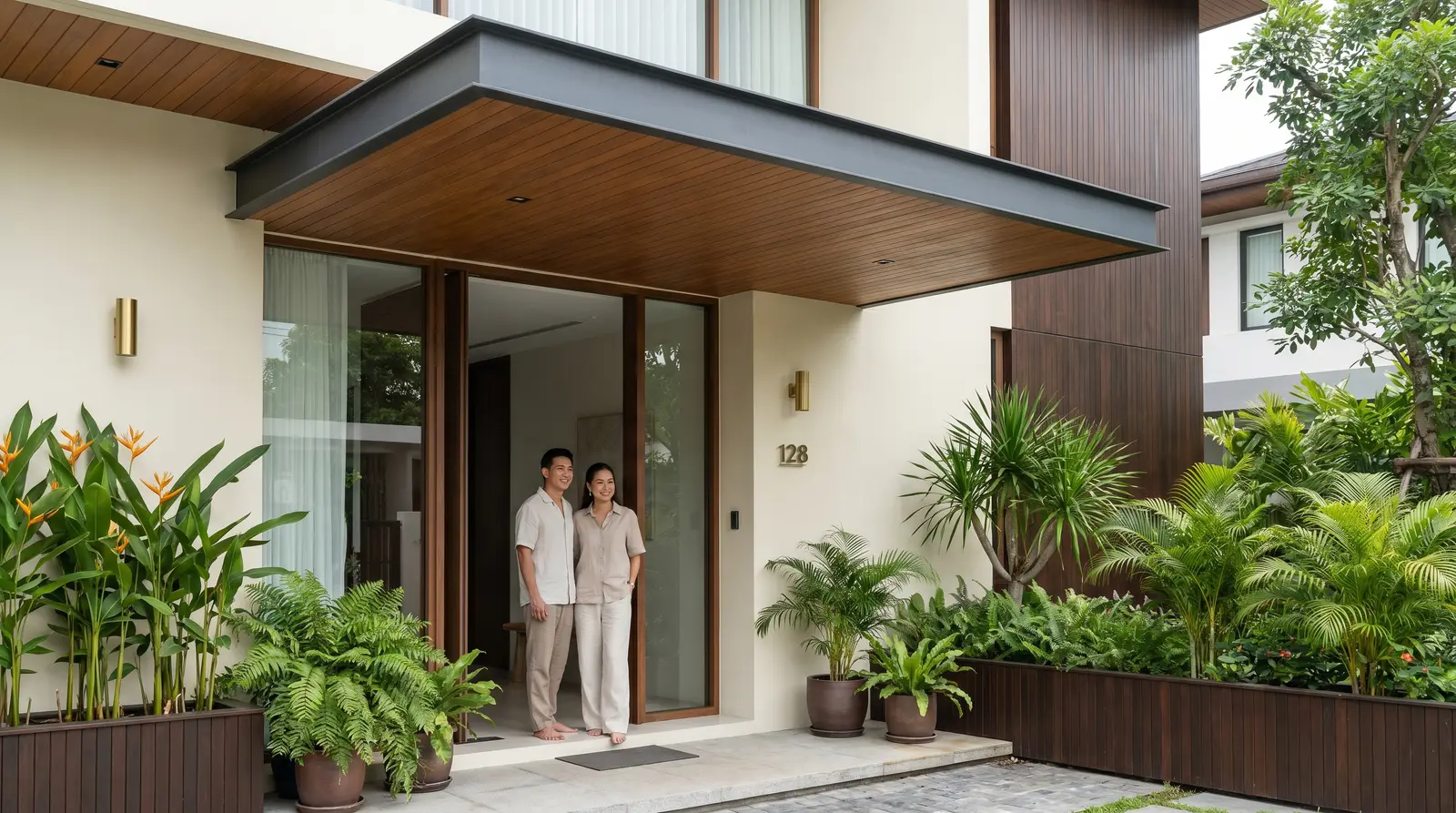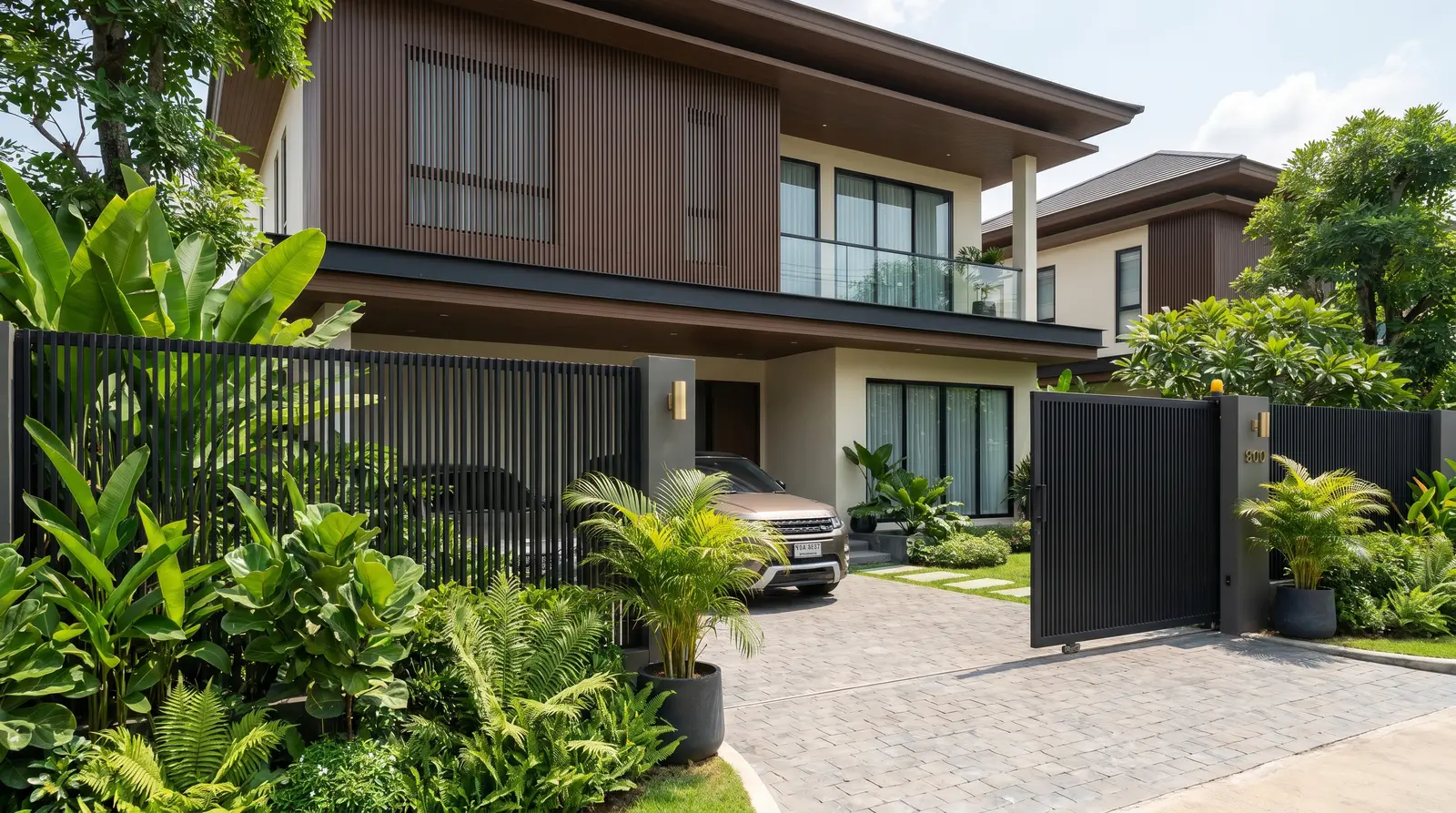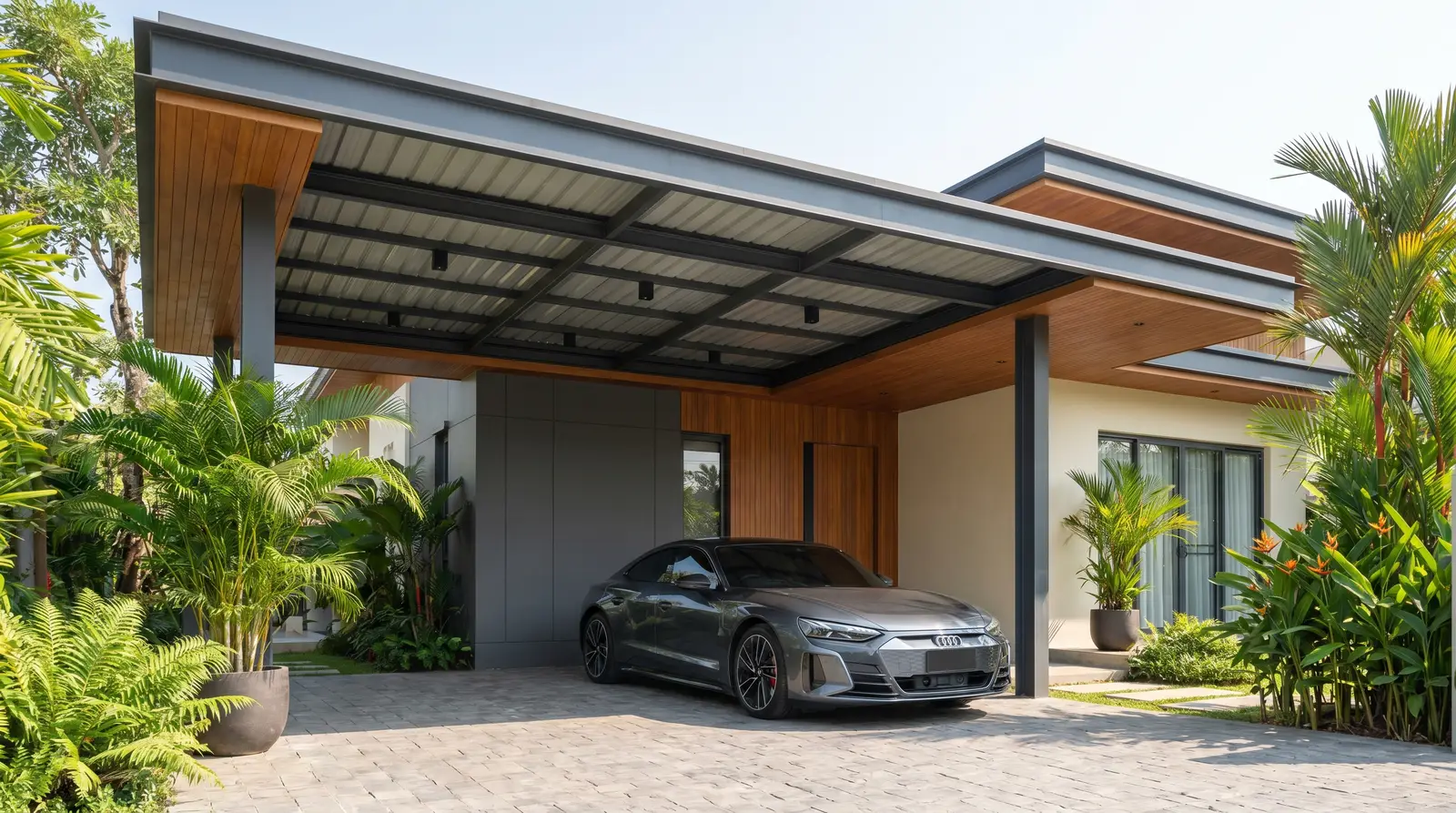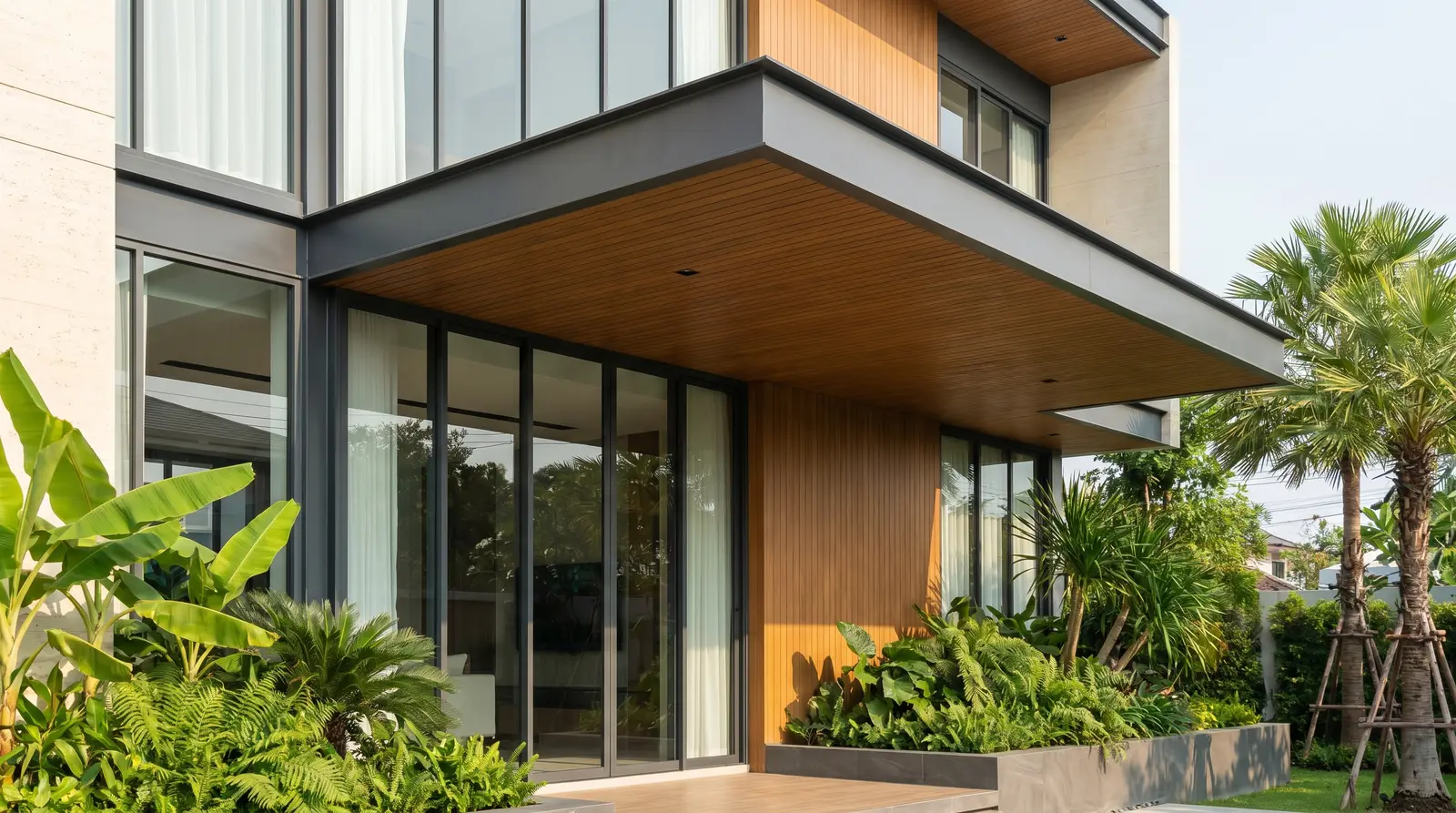
A home awning is one of the most practical upgrades a house can have: it blocks sun and rain, lowers the heat reaching your interior, and adds usable space out front. The common questions are which awning to choose, what roofing material works best, and how strong the structure needs to be. This guide walks through awning types — fixed and retractable, and those set over windows, doors or walkways — along with popular roofing sheets such as metal sheet, PU-insulated sheet, polycarbonate and Shinkolite, plus the steel frame, slope, drainage and cost factors that matter. NexSteel Solutions designs and installs awnings across Samut Prakan and Chonburi, focusing on clean, leak-free work suited to Thai weather. The goal is simple: help you choose confidently and get long-term value.
Awning Types: Match the Design to the Spot
Awnings fall broadly into fixed and retractable types. A fixed awning sits on a permanent steel frame — strong and able to take sun and rain year round. A retractable awning extends only when needed and folds away otherwise, which suits balconies and shopfronts. Awnings are also defined by where they go: above a window, over a door, or running along a walkway. Each spot calls for a different projection and height, so choose for the real use.
Roofing Materials Compared
Metal sheet is affordable and fast to install, but hot and noisy in rain without insulation. PU or PE-insulated sheet cuts heat and noise far better, making it ideal over seating areas. Polycarbonate lets soft light through and blocks UV, good where you want daylight. Shinkolite, a clear acrylic sheet, is strong, attractive, translucent and holds up well to sun. Choose by your budget and how much light you want underneath.
Steel Frame, Slope and Drainage
A durable awning starts with a correctly sized, anti-rust coated steel frame fixed firmly to the building so it carries the sheet load and resists wind. The slope must be calculated so water runs quickly into the gutter without pooling or backing up — generally, the longer the sheet, the steeper it needs to be. Fitting a gutter and downpipe keeps rain from blowing back toward the house and extends the awning’s life.
Choosing for Sun and Rain
Read the direction of sun and driving rain first. Faces hit by harsh afternoon sun benefit from insulated sheet or a deeper projection. Sides exposed to heavy rain need more slope and a longer overhang. If you want brightness without too much heat, polycarbonate or Shinkolite is a sound choice. Size the awning to cover the area you actually use, and add a margin so wind-blown rain doesn’t reach under the edge.
Installation and Care
Installation begins with an on-site measurement, design and quote. The crew then assembles the anti-rust steel frame, fixes it securely to the wall or posts, lays the roofing sheet, seals the joints with quality sealant, and fits the gutter. Upkeep is easy: clear dust and leaves off the sheet and out of the gutter, and check fixings and sealant once a year. For translucent sheets, wash off film occasionally to keep them clear.
Cost Factors and Mistakes to Avoid
Price depends on area, sheet type, the thickness of the structural steel, the height, and extras like gutters or insulation. The most common mistakes are using steel that is too thin, setting the slope so low that water pools, and skipping the gutter so rain blows into the house. Investing in a solid frame and clean detailing from the start almost always costs less than fixing problems later.